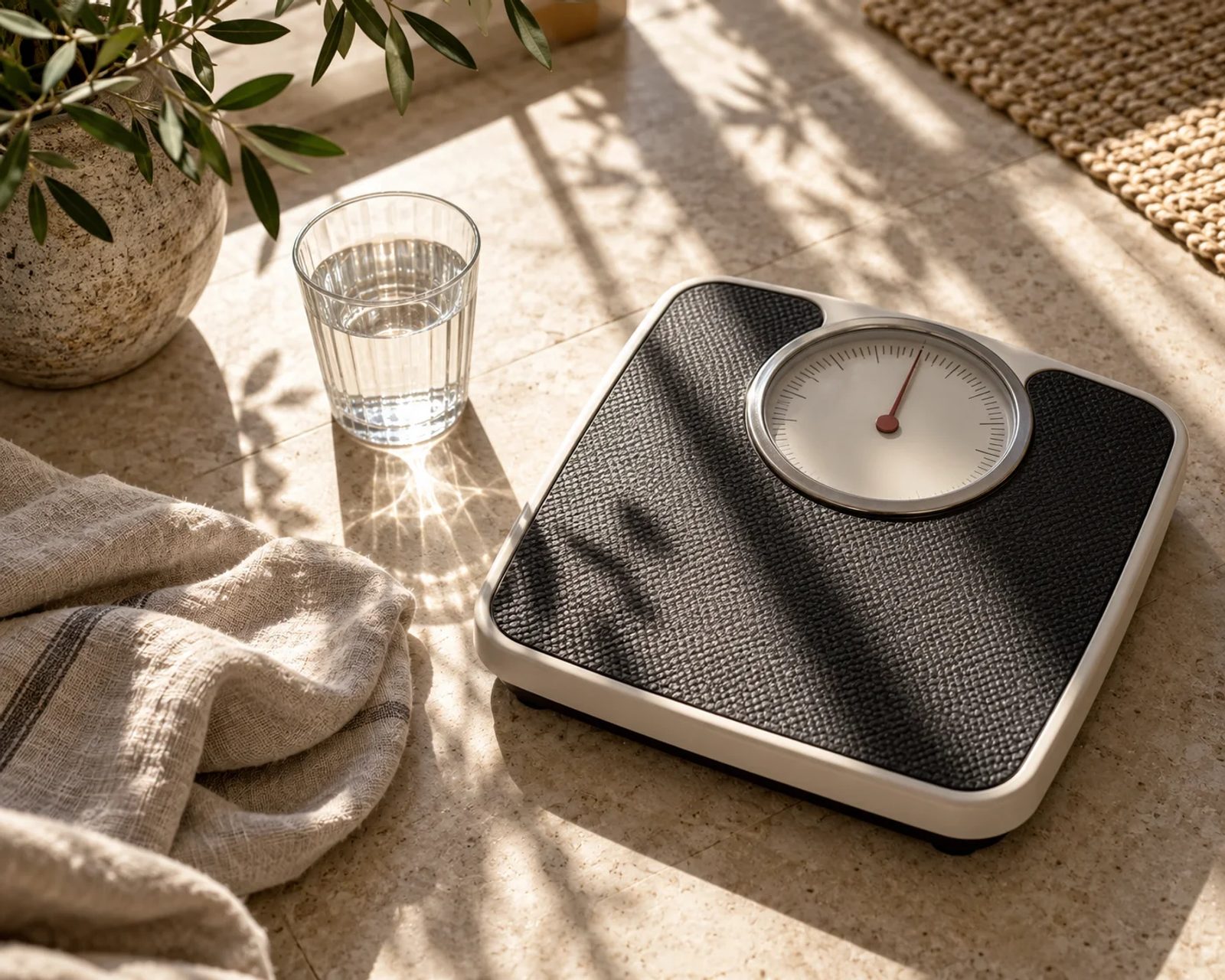
The Scale Measures More Than Body Fat
A bathroom scale only tells you your total weight. It can’t say if a change is from fat, water, muscle, or just what you ate or drank.
That’s why you might weigh more at night than in the morning, even though nothing big has changed with your body.
For example, if you drink a big bottle of water, the extra weight shows up on the scale until your body gets rid of it. Same with a meal—it counts until it’s digested.
That’s why it helps to treat daily weight as just a data point, not a final verdict.
Common Reasons Your Weight Fluctuates
1. Salt and water retention
After a salty meal out, your body might hold onto more water for a bit as it balances things out. That can bump up the scale the next day.
Seeing a higher number after takeout doesn’t mean you gained fat overnight. Things usually settle back to normal as your body resets.
2. Carbohydrates and stored glycogen
Your body stores some carbohydrates as glycogen, primarily in the muscles and liver. Glycogen is stored along with water.
Changing how many carbs you eat can shift your water weight, especially if your diet changes a lot. That’s why people sometimes see quick scale changes at the start of a strict diet.
3. Food and digestion
If you hop on the scale right after eating or drinking, that food and fluid is still in your system. Bathroom trips, digestion, and meal timing all affect the number you see.
So, weighing yourself in the morning versus after dinner isn’t a fair comparison.
4. Exercise and recovery
A tough workout can mess with your fluid balance. You might weigh less right after sweating, or even more later if your body holds onto water during recovery from something new.
Neither number directly measures fat lost from working out.
5. Hormonal changes
Hormone changes during your period can make you hold onto water and feel bloated. Many people see their weight go up and down at different times of their cycle.
That’s one more reason not to compare random days as if they’re all the same.
6. Medication or health changes
Certain medicines and health issues can change your appetite, body water, or weight. If something feels new or sticks around, talk to a healthcare professional.
How to Weigh Yourself More Consistently
You never have to track your weight if you don’t want to. But if you do, being consistent makes your numbers easier to understand.
Try using the same scale, on a flat surface, and weighing yourself at the same time of day under similar conditions. Most people like to do it in the morning after the bathroom and before breakfast.
Then, look at your readings as a pattern over time, not just one high or low day.
| More useful interpretation | |
|---|---|
| One higher morning | May be normal variation |
| A few up-and-down readings | Look at the broader trend |
| A sustained change across weeks | Worth reviewing habits and context |
| Rapid, unexplained gain with swelling or shortness of breath | Seek medical assessment promptly |
If weighing yourself a lot makes you stressed or obsessed, try doing it less often or use other ways to check in on your health. The scale is just a tool—it’s not required for self-care.
Can You Gain Two Pounds of Fat Overnight?
If your weight jumps by two pounds overnight, it doesn’t mean you gained two pounds of fat. True fat changes take longer; most short-term shifts are just fluids or what’s in your gut.
It’s easy to want a simple formula for weight change, but our bodies are more complicated. The NIDDK Body Weight Planner shows how your energy needs and weight shift over time, not in a perfect daily formula.
Bottom line: don’t make big changes to your diet or workouts just because of one weird weigh-in.
When a Weight Change Needs Medical Attention
Normal ups and downs are common, but not every change is just water weight.
Reach out to your doctor if you have unexplained weight loss, unexpected ongoing gain, or big changes along with other symptoms. Sudden gain with swelling, trouble breathing, or chest pain should get checked out right away.
If you started a new medication, that might matter too. Don’t stop taking any prescribed medicine just because of the scale—always check with your doctor first.
Frequently Asked Questions
Is it normal to weigh more at night?
Yes! Eating, drinking, and changes in hydration all affect your weight by the end of the day.
Should I weigh myself every day?
Only if it works for you and doesn’t add stress. Some people like daily weigh-ins to spot trends, but others prefer weekly or none at all.
Does a salty meal cause fat gain overnight?
A salty meal can make you hold onto water for a bit. One high number in the morning doesn’t show how much body fat you have.
The Bottom Line
Your body isn’t just a number. Weight goes up and down with water, food, activity, and all your body’s normal processes.
If you track your weight, focus on patterns—not single days. And if the number starts to mess with your mood or choices, it’s totally okay to step back and focus on your habits and how you feel instead.
This article offers general education, not individualized medical advice.
Sources and further reading
About the byline
betterhonestly EditorialThe editorial voice behind betterhonestly. We explore everyday health, nutrition, wellness, and supplements through research-backed information, practical explanations, and a healthy dose of curiosity. Our goal is simple: less hype, more clarity.