When you're trying to lose weight, protein advice can get loud. Eat more. Buy the shake. Hit the target. Suddenly, an ordinary lunch feels like a math problem.
Protein does deserve some attention. It can help with fullness and preserving lean tissue during weight loss. But you don't need to treat every meal as a competition to fit in as much as possible.
What does “more filling” actually mean?
Imagine two lunches. One leaves you looking for something else soon afterward. The other feels satisfying enough that you can get on with your afternoon.
Protein may help with that feeling of fullness. It doesn't mean you should expect to stay full for a precise number of hours, or that being hungry later means you chose the wrong lunch.
In a small trial involving men with overweight or obesity, a higher-protein eating plan during weight loss produced greater reported fullness than the comparison plan. Daily hunger wasn't different between the groups. Those are related feelings, but they aren't identical.
The study also doesn't tell us how every person will respond. Your preferences, meal size, and the rest of the meal still matter.
Use the research as a reason to consider protein, not as a promise that it will switch off your appetite.
Why muscle enters the conversation
Weight loss doesn't necessarily come entirely from body fat. Researchers also look at changes in fat-free mass: everything in the body other than fat, including muscle, water, and other tissues.
A controlled trial of 39 adults compared three protein levels during a short period of weight loss. Participants receiving the two higher-protein diets lost a smaller proportion of weight as fat-free mass than those receiving the lowest-protein diet.
That's useful evidence, with limits. The study was small, involved a substantial energy deficit, and lasted just over a month. It doesn't establish one ideal protein target for everyone or guarantee that all muscle loss can be prevented.
It also helps explain why weight alone isn't the whole story. Losing weight and preserving the tissues that support everyday function are related but different goals.
Build a meal before you build a target
Take a look at one meal you eat often. Does it include a food that provides protein?
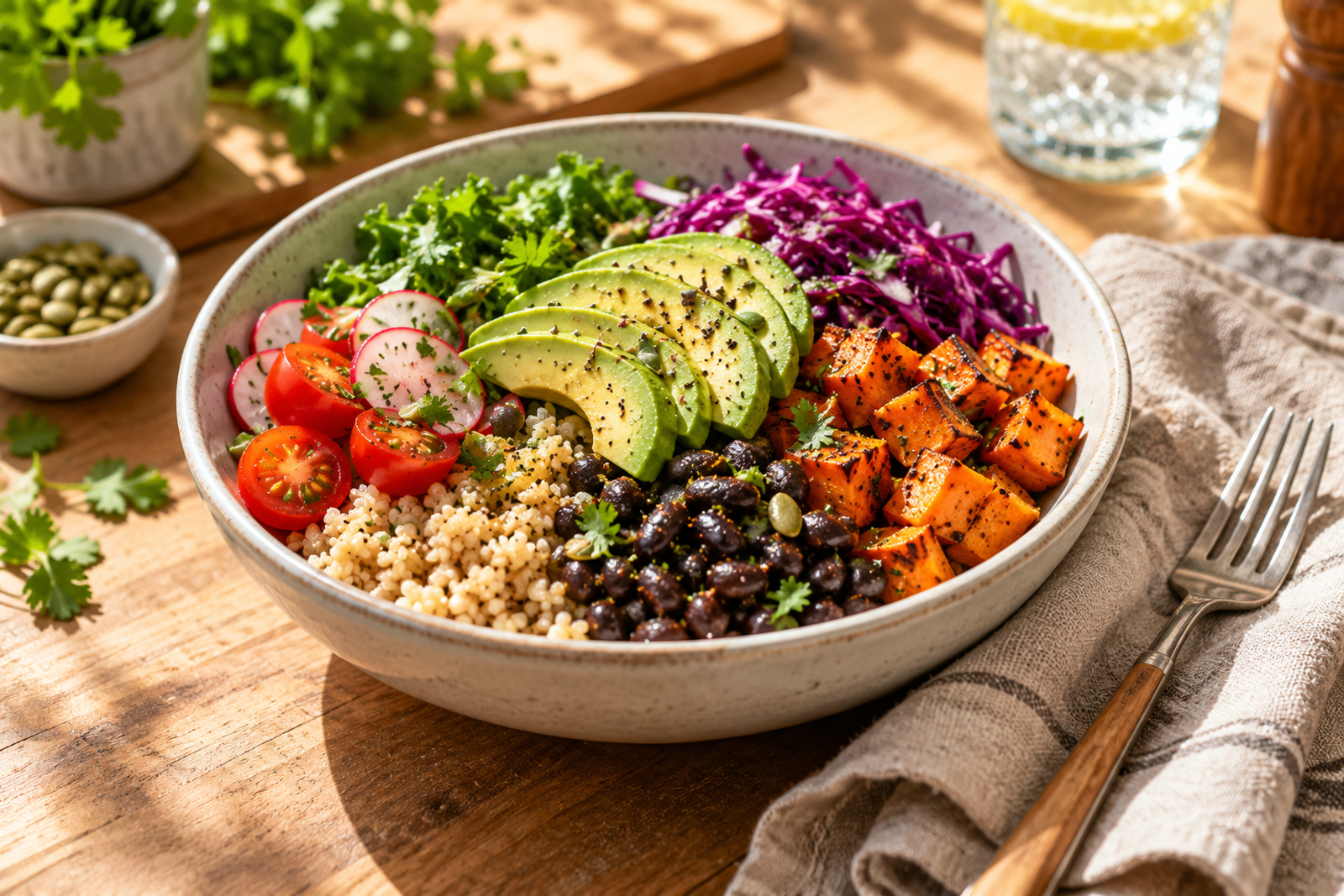
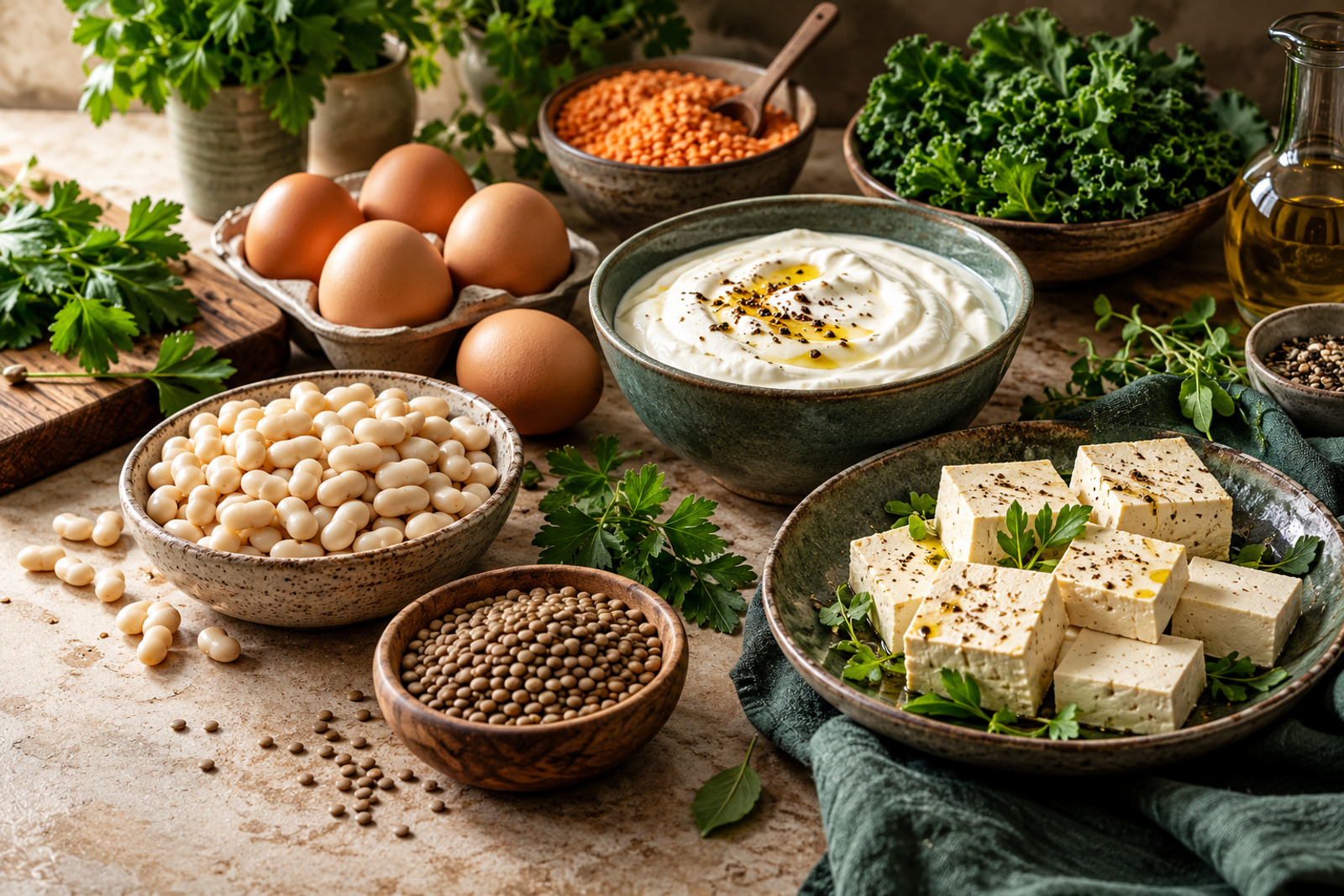
You might choose eggs, fish, poultry, yogurt, beans, lentils, tofu, or another food you enjoy. You can use plant foods, animal foods, or a mix. You don't need to replace familiar meals with products labeled “high protein.”
Here are a few ways that could look in an ordinary kitchen:
| A possible addition or adjustment | |
|---|---|
| Vegetable soup | Stir in beans or lentils. |
| Toast and fruit | Add eggs or a serving of yogurt, if those suit you. |
| Rice and vegetables | Include tofu, fish, chicken, or beans. |
| Pasta with tomato sauce | Add lentils, ground meat, or another preferred protein food. |
These aren't nutritionally identical swaps or prescribed portions. They're ideas for making protein part of meals you already know how to prepare.
Keep the rest of the meal in view, too. Adding protein doesn't mean vegetables, grains, and other foods have become unimportant. A meal still needs to be enjoyable and practical.
Don't leave strength work out
Eating protein isn't the same thing as training your muscles. For adults, the CDC recommends muscle-strengthening activity on at least two days a week, working all major muscle groups.
That might involve weights, resistance bands, or suitable body-weight exercises. The starting point depends on your current ability and health.
If you're new to strength training, learning a few movements with appropriate guidance may be more useful than buying another food product. You can ask a qualified exercise professional to help you find exercises you can perform comfortably and build on over time.
Try keeping a simple note of what you're learning. “I feel more confident doing this movement” can be useful progress even when a scale reading tells you little about your strength.
How much do you personally need?
There isn't one number that fits every reader. Body size, age, activity, health, and the overall eating plan all affect the discussion.
A registered dietitian can help you set a target when a number would be useful. Bring a typical day's meals so the advice starts with what you actually eat.
If you have kidney disease, don't adopt a high-protein plan without individual advice. The NIDDK explains that protein needs can change with kidney disease and its treatment. Some people need moderation, while people receiving dialysis may need more. “More is better” is too simple here.
For now, pick one meal that feels unsatisfying or regularly lacks a protein source. Try a food you like, keep the rest of the meal balanced, and notice whether the change makes that meal work better for you.
This article offers general education, not individualized medical advice.
Sources and further reading
- The Effects of Consuming Frequent, Higher Protein Meals on Appetite and Satiety During Weight Loss in Overweight/Obese Men
- Effects of High-Protein Diets on Fat-Free Mass and Muscle Protein Synthesis Following Weight Loss: A Randomized Controlled Trial
- Adult Activity: An Overview
- Healthy Eating for Adults with Chronic Kidney Disease
About the byline
betterhonestly EditorialThe editorial voice behind betterhonestly. We explore everyday health, nutrition, wellness, and supplements through research-backed information, practical explanations, and a healthy dose of curiosity. Our goal is simple: less hype, more clarity.