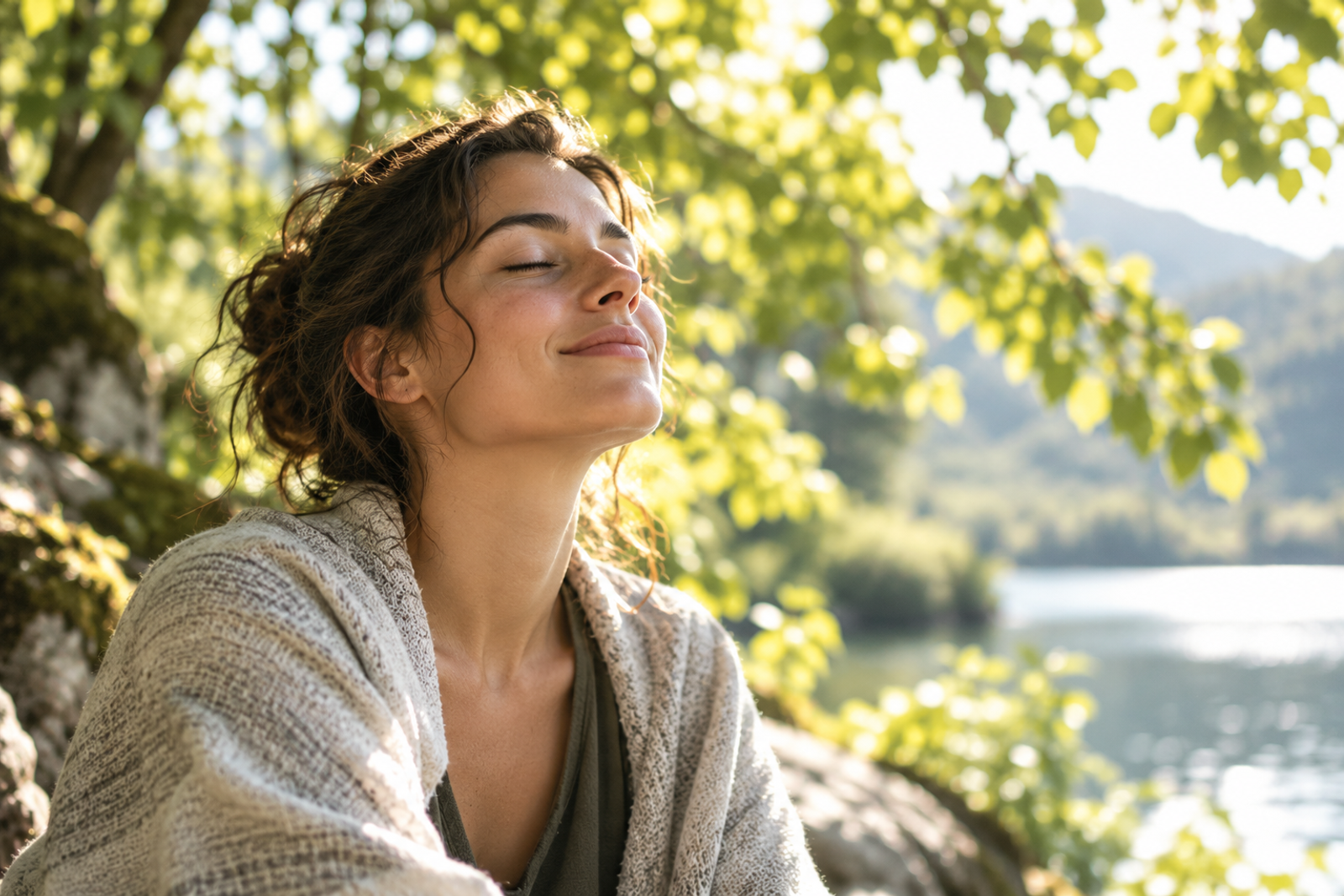
“Take a deep breath” can sound unhelpful when you're already overwhelmed. A breathing exercise won't answer the difficult email or make an impossible deadline reasonable.
Still, gently changing how you breathe may help you feel calmer. The research is encouraging in places, but it supports a modest, practical tool—not a cure for every form of stress or anxiety.
What has actually been studied?
Breathing exercises vary. Some focus on slowing the breath. Others use counting, longer exhalations, or breath holds. Results from one technique don't automatically apply to the others.
The National Center for Complementary and Integrative Health describes preliminary evidence that diaphragmatic breathing may reduce stress. Diaphragmatic breathing involves allowing the main breathing muscle beneath your lungs to do its work, often noticed as gentle movement around the belly.
“Preliminary” matters. It means there are promising findings, not a settled answer about the best technique, dose, or long-term effect for every person.
A short daily practice showed promise
A 2023 randomized study in Cell Reports Medicine compared three breathing practices with mindfulness meditation. Participants practiced for five minutes a day over one month.
The researchers found that breathwork, especially an exhale-focused practice called cyclic sighing, produced greater improvement in mood and a larger reduction in breathing rate than meditation in that study.
That doesn't establish a treatment for an anxiety disorder. The study was short and conducted remotely, and its findings don't tell us whether benefits last after people stop practicing. A lower breathing rate also isn't the same thing as resolving the cause of stress.
The reasonable takeaway is that a short practice may be worth exploring if you find it comfortable. Claims that it will “reset your nervous system” or reliably fix a hormone problem go beyond what this trial showed.
Try the gentle version first
You don't have to recreate a research protocol to try a simple calming exercise. The NHS breathing guide emphasizes comfortable, unforced breathing.
Try this while sitting somewhere supported and safe:
- Let your shoulders settle and loosen restrictive clothing if needed.
- Breathe in gently through your nose, allowing the breath to move as deeply as feels comfortable.
- Let the breath out gently through your mouth.
- If counting helps, count steadily during each breath. Use a count that feels easy rather than trying to reach a target.
- Continue comfortably for a few minutes if it feels helpful. The NHS guide suggests practicing for about five minutes.
You don't need to fill your lungs as much as possible or hold your breath. This gentle exercise isn't the cyclic-sighing protocol tested in the study above; it's a separate practical option.
If counting makes the experience feel like a test, leave the numbers out. The point is to find a comfortable rhythm, not perform it perfectly.
What if focusing on breathing makes you anxious?
That can happen. NCCIH notes that relaxation techniques occasionally bring unwanted experiences, including increased anxiety or intrusive thoughts. A history of trauma or certain health conditions may also change how someone responds.
You can stop. Return to your usual breathing and shift your attention to your surroundings. You don't need to push through distress to make the exercise “work.”
If you feel dizzy, breathless, or uncomfortable, stop the practice. Ask a healthcare professional for advice if symptoms persist or if you have a condition that affects breathing. Don't assume new or severe breathing difficulty is simply stress.
An intense breathwork session, rapid breathing, or prolonged breath-holding is a different activity from the gentle practice described here. More intensity isn't a sensible next step just because a quiet exercise didn't help.
Find a place for it, without making it another chore
You might try a brief practice before a routine meeting or after you finish work. Choosing a relatively calm moment can make it easier to decide whether you actually like the exercise.
Afterward, ask a small question: “Do I feel a little more settled?” Avoid turning the answer into a score you have to improve every day.
If it helps, keep it available. If it doesn't, you can choose another way to pause, such as listening to music or speaking with someone you trust. Preferences differ, and no single technique needs to become your signature coping tool.
Persistent anxiety or stress that disrupts daily life deserves professional support. A breathing exercise can sit alongside that support; it doesn't have to carry the whole burden.
This article offers general education, not individualized medical advice.
Sources and further reading
About the byline
betterhonestly EditorialThe editorial voice behind betterhonestly. We explore everyday health, nutrition, wellness, and supplements through research-backed information, practical explanations, and a healthy dose of curiosity. Our goal is simple: less hype, more clarity.